Dynamic Career Guidance for Changing Times
Is a career always a calling? Not necessarily. Especially when career guidance falls short. During adolescence, interests and abilities are constantly evolving, as are personal views and aspirations. All of these factors influence career choices. Back in 2016, the founders of Innoviduum recognised the need for a digital companion that could take all these variables into account.
Focusing on Strengths Instead of Labels
Recognising your strengths and finding your own career path: Innoviduum is not a traditional career guidance platform. Instead, the company offers a holistic journey of self-discovery that leaves plenty of room for personal development. This approach is rooted in the experiences of founder Markus Pollhamer.
Following in his father’s footsteps initially led Markus to train as a tiler – but it did not bring him fulfilment. A little encouragement from a friend and a teacher eventually inspired him to take his future into his own hands and pursue an academic career. “It turned out that there is much more to it than what a rigid test tells you or which shortcomings it identifies. We are constantly evolving, and people need opportunities to shape their own career paths,” says Markus. This belief stayed with him until he founded Innoviduum in 2016. Originally established by five people, the EdTech company is now led by Markus and his wife Anna Pollhamer. Together with their team, they develop innovative solutions for strengths-based personal development and career guidance.
Artistic Woodturning or Furniture Retail?
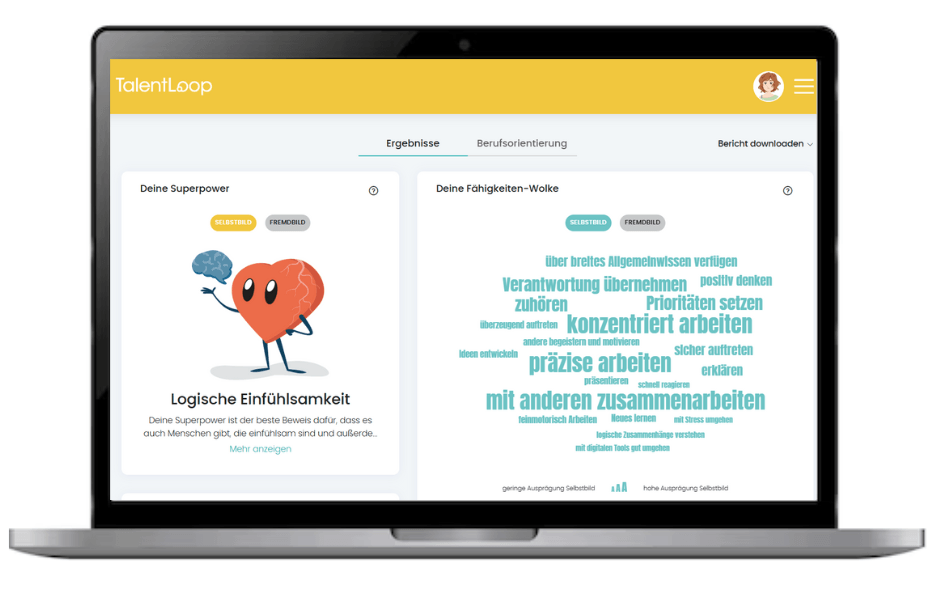
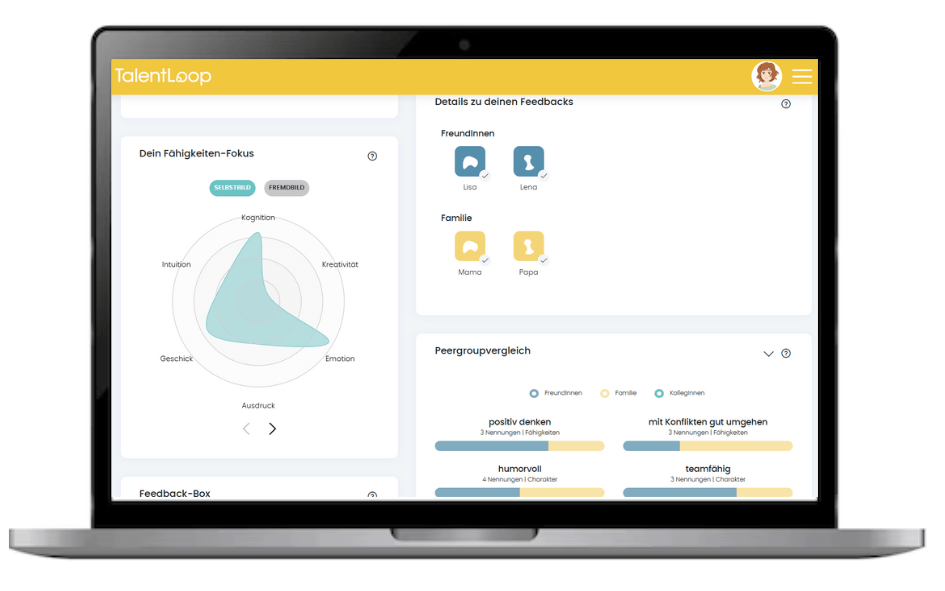
Innoviduum’s two main educational products, TalentLoop and TalentLoop Career, complement each other. They help young people build self-confidence, reflect on their abilities and explore career opportunities. Positive feedback from classmates, teachers and parents adds an external perspective to how young people see themselves, helping them recognise their strengths and potential.
The aim is not to guide young people towards one perfect job, but to open up opportunities that match their abilities, needs and personal values. For example, being a carpenter does not necessarily mean the same working environment for everyone. “Someone who values harmony or community might feel at home in a small artistic woodturning workshop, while someone else might thrive in the repair department of a large furniture retailer,” Markus explains. Innoviduum sees career guidance as an ongoing process of personal development, supported by its digital application.
AI, Multilingualism and Feedback
The learning platforms TalentLoop and TalentLoop Career are based on scientific findings from positive psychology and empirical educational research. At their core is a strengths-based approach that helps young people discover their potential, develop a positive self-image and a sense of self-efficacy, and actively shape their personal and professional futures.
The level of complexity increases according to students’ age and educational stage: from playful vocabulary activities starting in grade 5 to in-depth reflection and practical job application preparation in upper secondary school. Instead of traditional questionnaires, young users encounter a carefully designed combination of personalised learning pathways, reflections on role models or favourite films, and activities that help them explore their interests and preferred working environments.
“AI supports young people particularly in reflecting on themselves, exploring career opportunities and preparing for concrete next steps,” says Markus. Alongside their digital career guidance tools, Markus and Anna also offer workshops for schools on positive psychology, strengths-based development and school improvement.
When the Timing Is Right
“We can see that there is a real need. According to a 2025 OECD study, the proportion of 15-year-olds without clear career expectations increased from around 25% to 39% between 2018 and 2022. In Austria, the figure was even higher, at around 42%,” says Markus. At the same time, he points out that AI and digitalisation are transforming the world of work and, with it, the demands placed on future generations.
This makes it all the more important to help young people understand their own strengths, interests and values, enabling them to make independent decisions about their career paths. This is precisely where Innoviduum comes in: rather than providing answers from the outside, it helps young people develop clarity from within.
Short Interview with Markus

Why does Innoviduum use narrative approaches instead of traditional career-matching tests?
Because a test cannot and should not make decisions for young people. Traditional matching approaches often create the impression that “the test tells me what I have to become”. But choosing a career is a proactive process of shaping your own identity. Narrative approaches encourage young people to tell the story of their own future, helping them develop a genuine sense of self-efficacy.
How can AI help young people prepare for jobs that may not even exist yet?
Static databases are not enough because job profiles are constantly changing. We use AI to retrieve information in real time, ensuring that users have access to the latest available information. AI takes care of what it does best, leaving teachers and young people more room for personal reflection and guidance.
We increasingly hear predictions that traditional professions might eventually disappear altogether. Can you imagine that happening?
Of course, I’m familiar with these extreme future scenarios from the tech industry. But I find it very difficult to imagine that the connection between personal talent and work will ever disappear completely or become irrelevant. Work gives people a sense of purpose. We are social beings, and that is something we must never lose sight of, regardless of what technology makes possible.
What matters most to you in your work?
We believe that when professions and requirements are changing ever more rapidly, it is no longer enough to prepare young people for a single career decision. They need to learn how to continually reorient themselves, understand their own strengths and values, and actively shape their future. Our education system often focuses on what children and young people cannot yet do. We want to shift the focus towards the strengths and abilities they already possess. Because knowing your strengths builds self-confidence and helps you shape your own future more independently.

More articles
The following articles might also interest you.
Looking back at the EdTech Austria Fellowship 2026
28. October 2026
The Future of Learning Starts Today
8. October 2026
Our 2025 Impact Report is here
6. October 2026
Stronger together
17. September 2026
Companions and Catalysts: Polycular and EdTech Austria
4. August 2026