The Future of Learning Starts Today
A Recap of the EdTech Austria Summit 2026
What will schools look like in 2035? What skills will we need in a constantly changing world? And how can education technology genuinely improve learning? These were the key questions at the EdTech Austria Summit 2026, held on 7 October at the Alte Saline in Hallein. The event focused on the future of learning – and how we can start shaping it today.
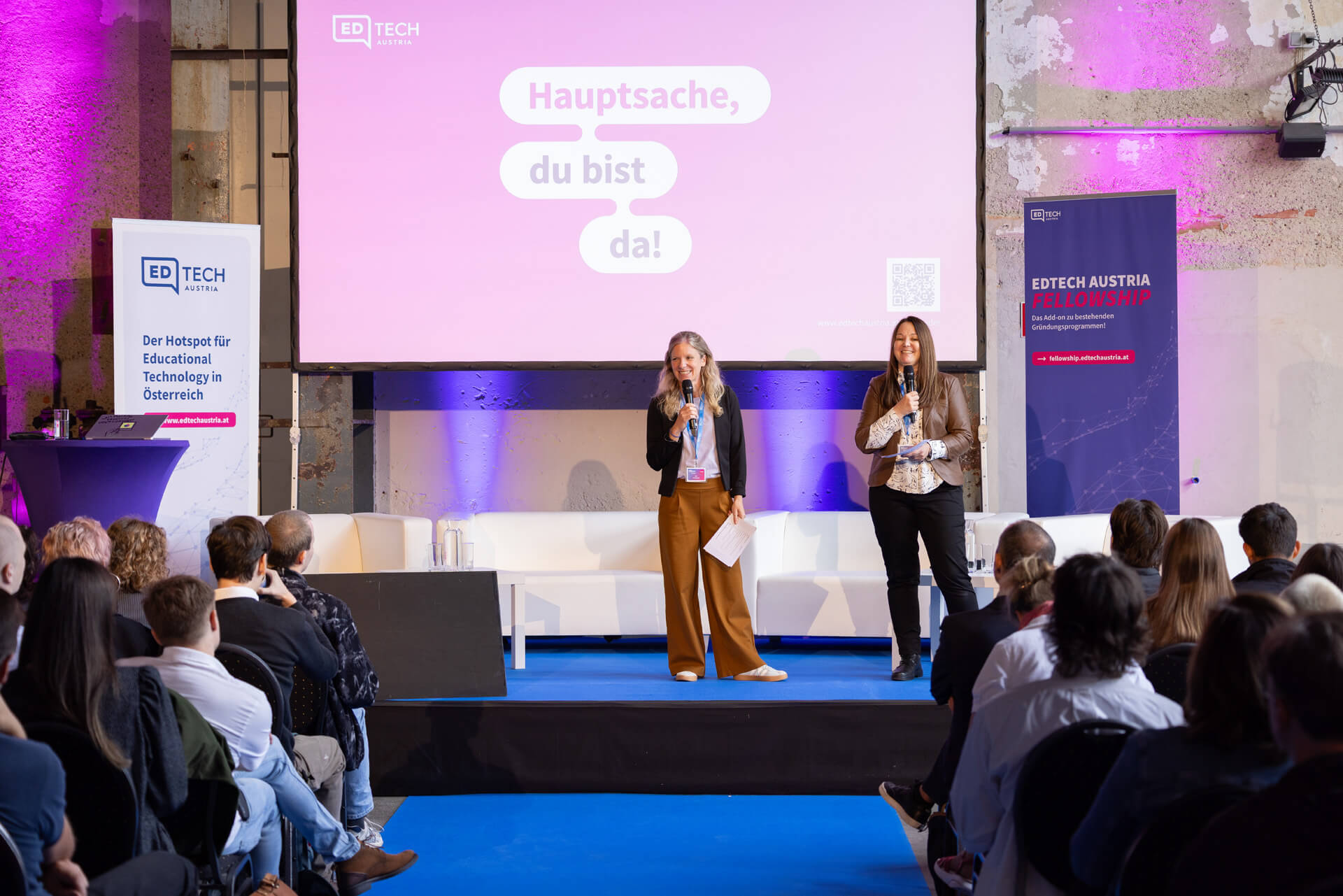
Education experts, EdTech companies, educators, and representatives from politics, business and research came together to explore new perspectives, share experiences and rethink the future of education. Two keynotes offered particularly thought-provoking insights: a journey into possible schools of the future and an exploration of why artificial intelligence should do more than provide answers – it should help people learn.
Shaping the Future Requires the Right Framework
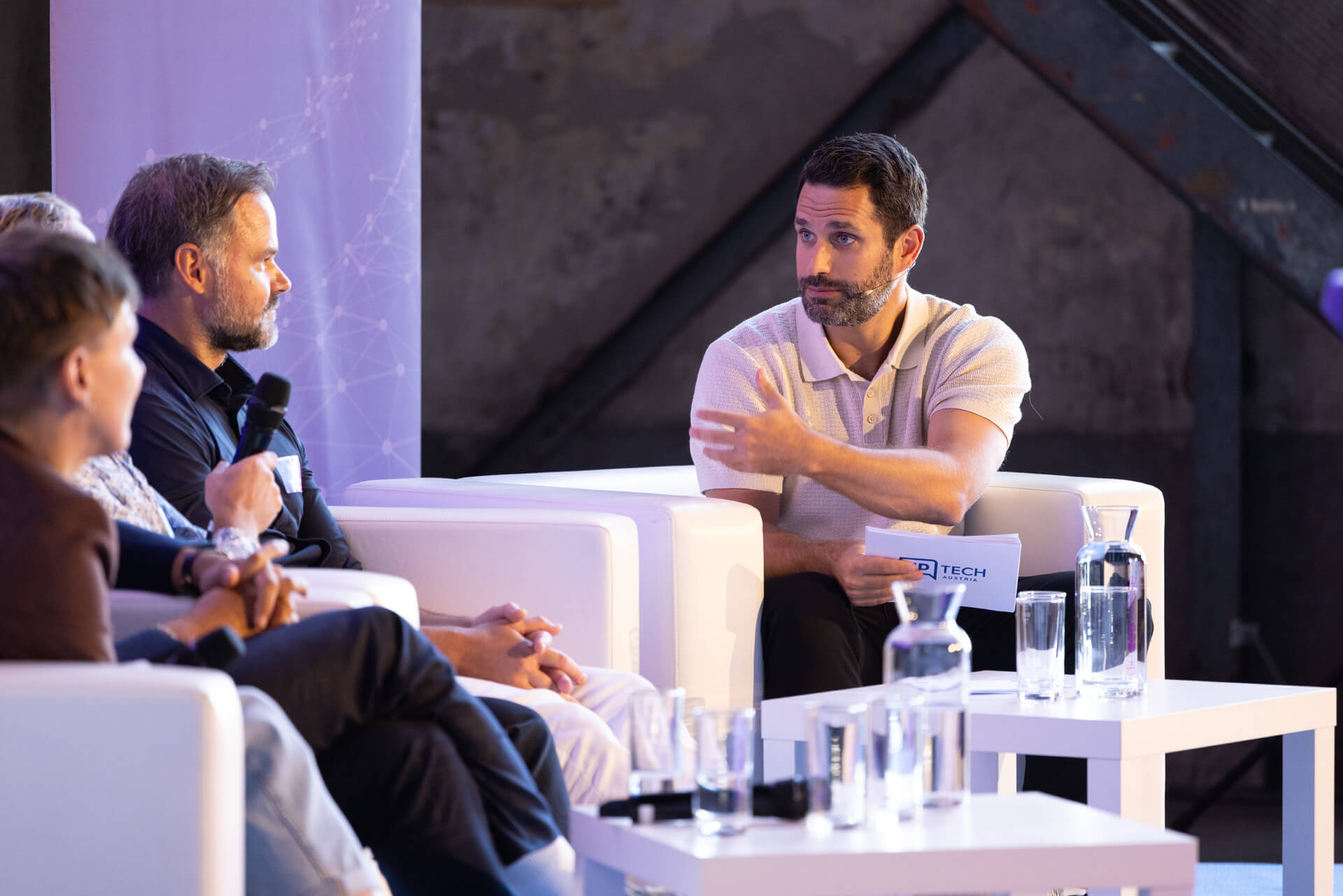
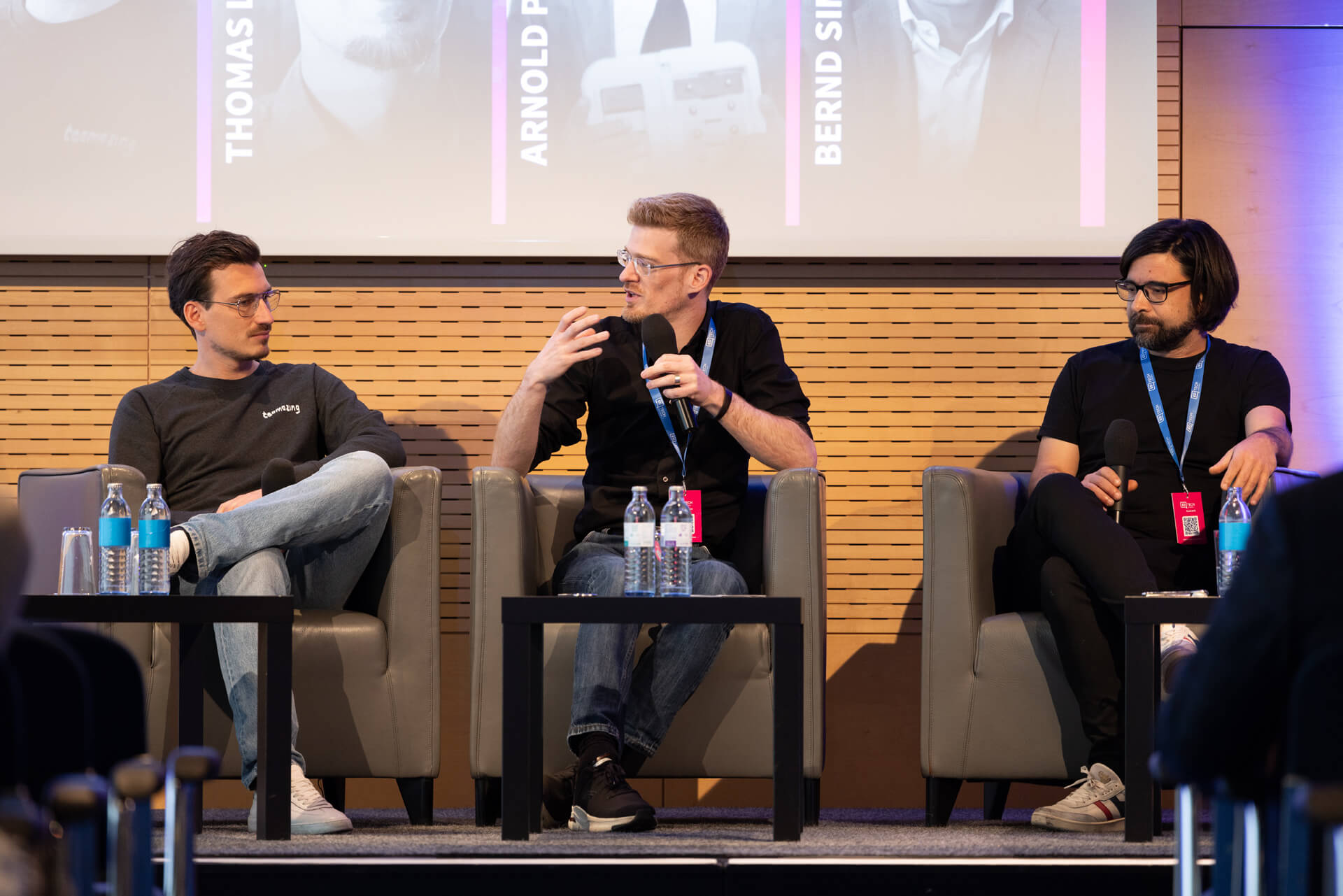
The opening panel made one thing clear: the future of learning depends on more than technological developments alone. Representatives from education, politics and business discussed the skills young people will need in the future and the conditions required to support their development.
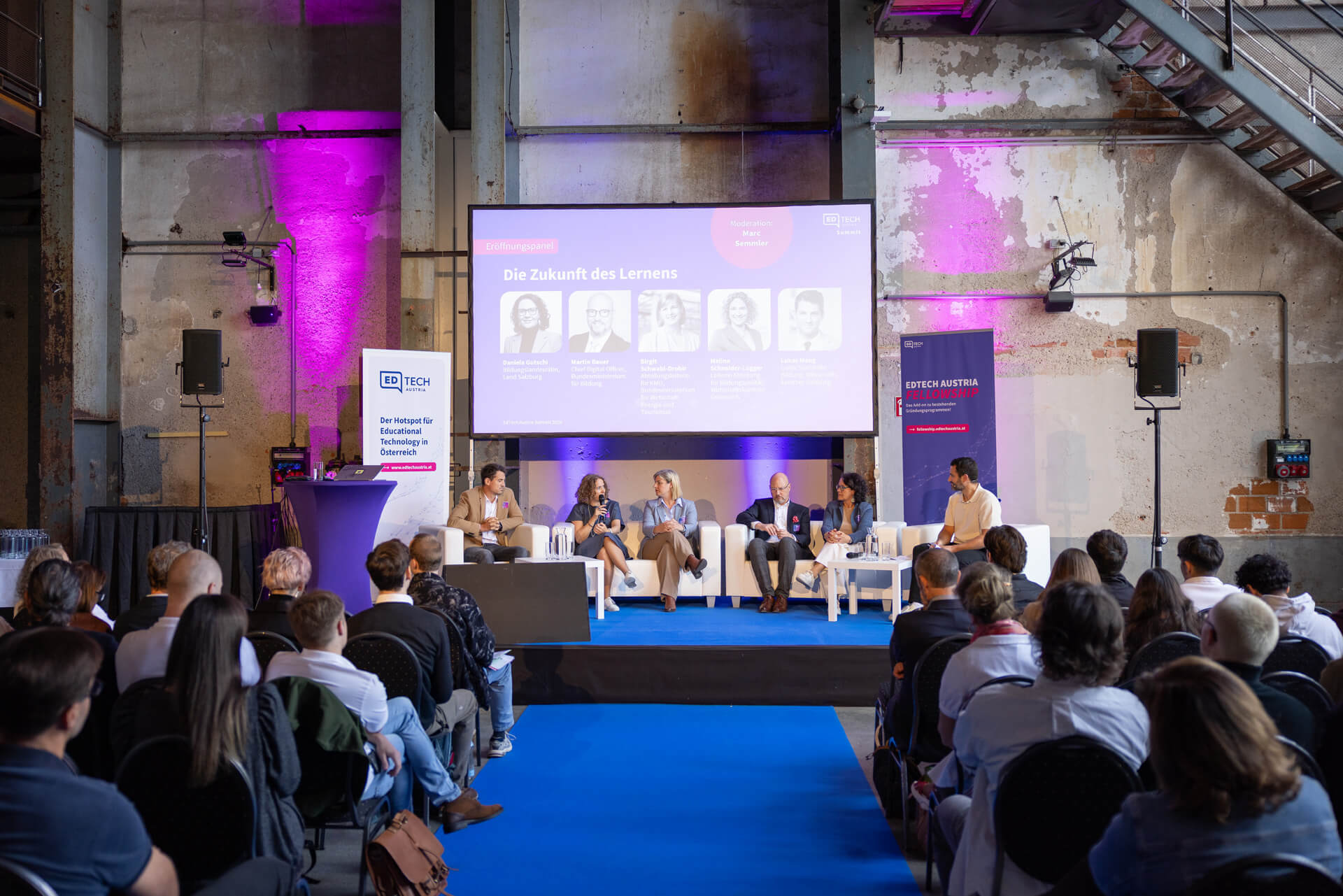
The discussion addressed the responsible use of AI, the importance of European solutions and the challenge of keeping education in step with rapid technological change.
Daniela Gutschi, Salzburg’s Regional Minister for Education, emphasised: “The rapid development of AI presents us with new challenges. Our task is not to stop this train, but to create the right conditions to steer these developments in a meaningful direction. To achieve this, we need to work together, focus on European solutions and give children and young people the opportunity to develop their full potential.”
Melina Schneider-Lugger from the Austrian Federal Economic Chamber (WKÖ) highlighted how constant access to knowledge is fundamentally changing the way we learn. The growing challenge is to critically evaluate information and turn knowledge into practical skills. This requires opportunities for personalised learning in every area of life – from kindergarten and school to the workplace.
Schools in 2035: What Kind of Future Do We Actually Want?
What will schools look like in less than ten years? More AI, fewer teachers, personalised learning pathways? Or perhaps no digital technology at all?
In his keynote, “Futures of Learning – Five Schools in 2035”, education expert Jöran Muuß-Merholz from the agency J&K took the audience on a thought-provoking journey into the future. Rather than predicting a single outcome, he presented five deliberately contrasting school models.
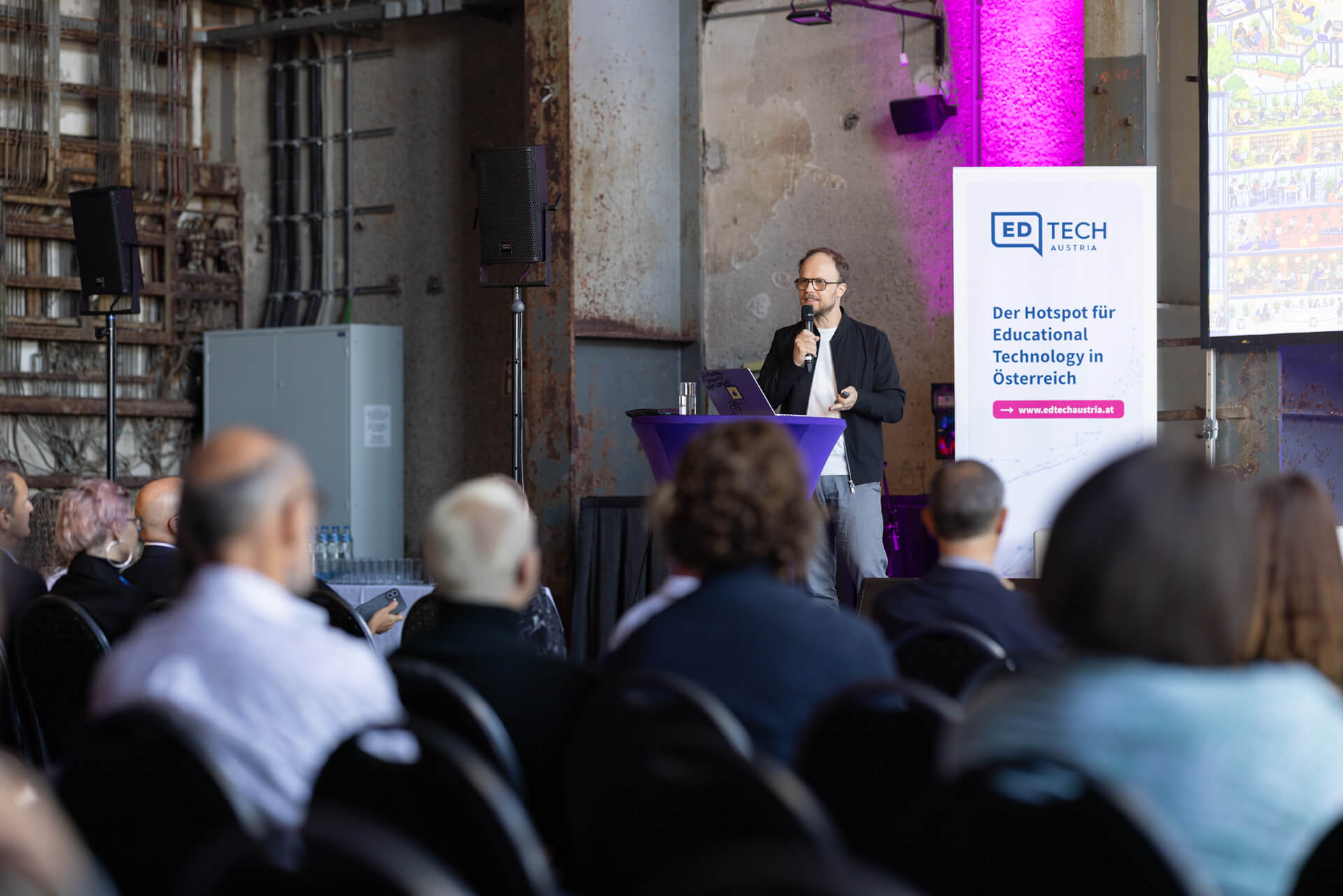
The scenarios ranged from a completely technology-free school focused on traditional subjects and practical skills to highly personalised, AI-driven learning and a school where children and young people decide for themselves what they want to learn. Other models emphasised global connections, collaborative learning and social engagement. These scenarios illustrated just how differently schools could be designed – and the educational philosophies behind embracing or deliberately rejecting technology.
The most technologically advanced school is not necessarily the best from an educational perspective. Instead, we need to ask fundamental questions: How much freedom should learners have? What role should teachers play? How important is learning together? And how much influence do we want technology to have on education? The central message: Technology should not determine what schools of the future look like. First, we need to decide what kind of education we want – and then consider which technologies can help us achieve it.
When AI Takes Over Learning: Does It Actually Make Us Smarter?
The second keynote approached this question from a different perspective. In her talk, “How the Brain Learns: Why Educational AI Needs to Be Designed Differently”, education innovator Svenia Busson from Education Futures explored what genuinely helps people learn – and where AI might even become an obstacle. After all, just because artificial intelligence helps us complete tasks faster does not necessarily mean we are learning anything in the process. Busson began by challenging common myths about learning. There is no solid scientific evidence supporting the idea that everyone has a fixed learning style. The claim that we only use ten per cent of our brains is also false.
Our brains remain capable of learning throughout our lives. Key factors include focused work with regular breaks, avoiding multitasking and revisiting what we have learned at regular intervals.
AI as a Learning Coach, Not an Answer Machine
Learning requires attention, time and effort. Yet AI applications can reduce precisely that effort. This is useful when the goal is to complete tasks efficiently, but it can become problematic when the goal is to learn. An essay is written, a maths problem solved, a presentation completed. But what happens to our abilities when we regularly outsource the thinking involved to AI?
Busson warned that AI can improve the quality of visible results without necessarily developing learners’ actual skills. So what does this mean for education technology? AI-powered learning tools should not simply provide ready-made answers. Instead, they should encourage independent thinking – by offering hints, asking questions and helping learners arrive at solutions themselves. The social dimension is equally important: AI should not replace human relationships but encourage interaction with teachers, mentors and fellow learners.
Busson’s message presented the EdTech sector with an important challenge: education technology should not simply make people more productive. It should strengthen their ability to learn.
Digital Learning Tools in Practice
How education technology can be meaningfully integrated into classroom teaching was also the focus of the panel “Marktplatz Lernapps – Perspectives on the Future of Digital Learning”. As Austria’s Marktplatz Lernapps (Learning Apps Marketplace) moves into regular operation, it reaches an important milestone. Schools gain access to quality-assured digital learning applications that they can select according to their individual needs.
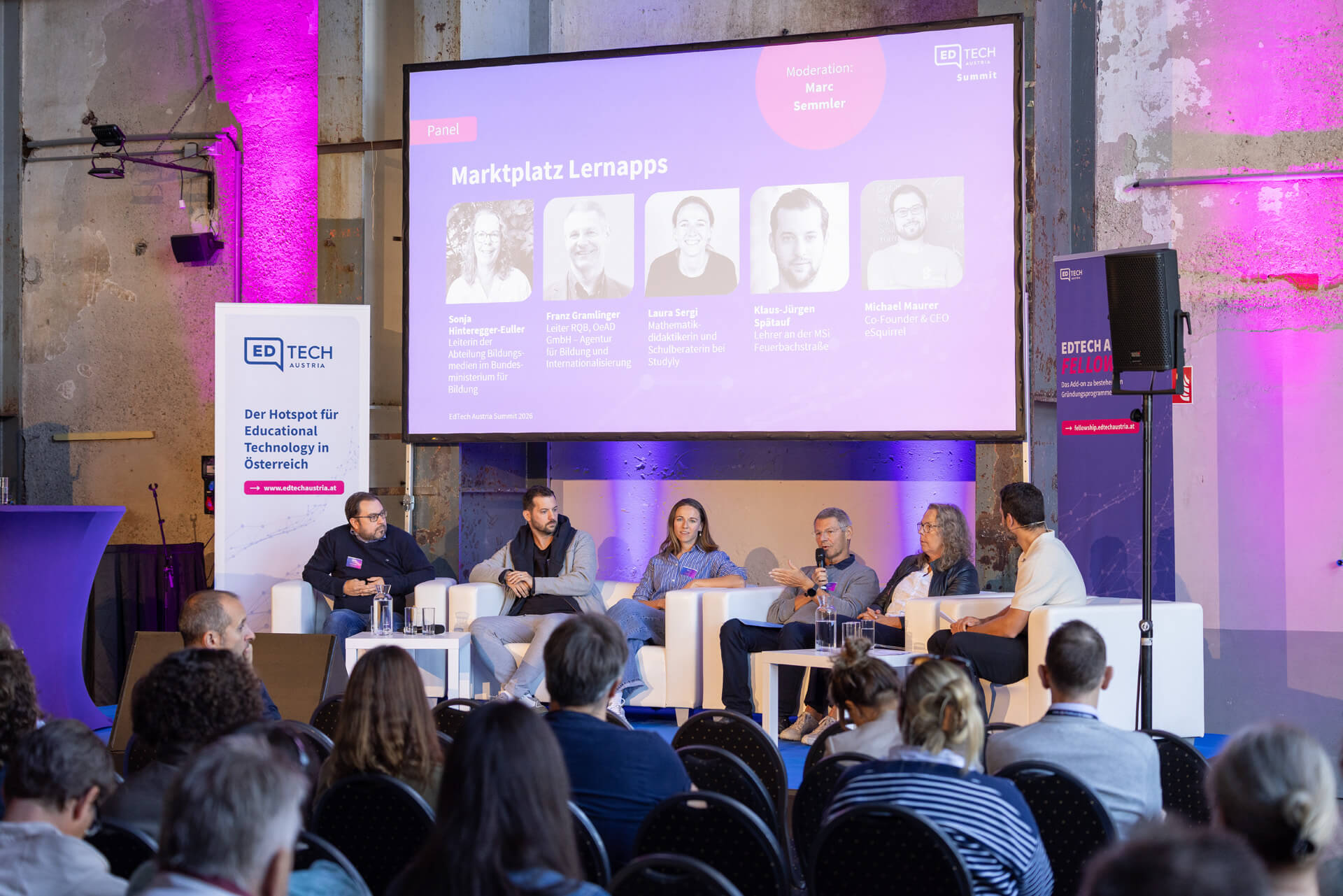
The discussion highlighted that quality assurance, data protection and straightforward procurement are just as important as educational value. Learning apps can support progress through immediate feedback or help overcome language barriers, for example. What matters most, however, is that these tools meet learners’ needs and fit the teaching context.
Learning for a Changing World of Work
Schools are not the only places undergoing change. The skills required in the workplace are constantly evolving, too. The “Reskilling Revolution” panel therefore explored how people can continue learning and developing their abilities throughout their education and working lives.
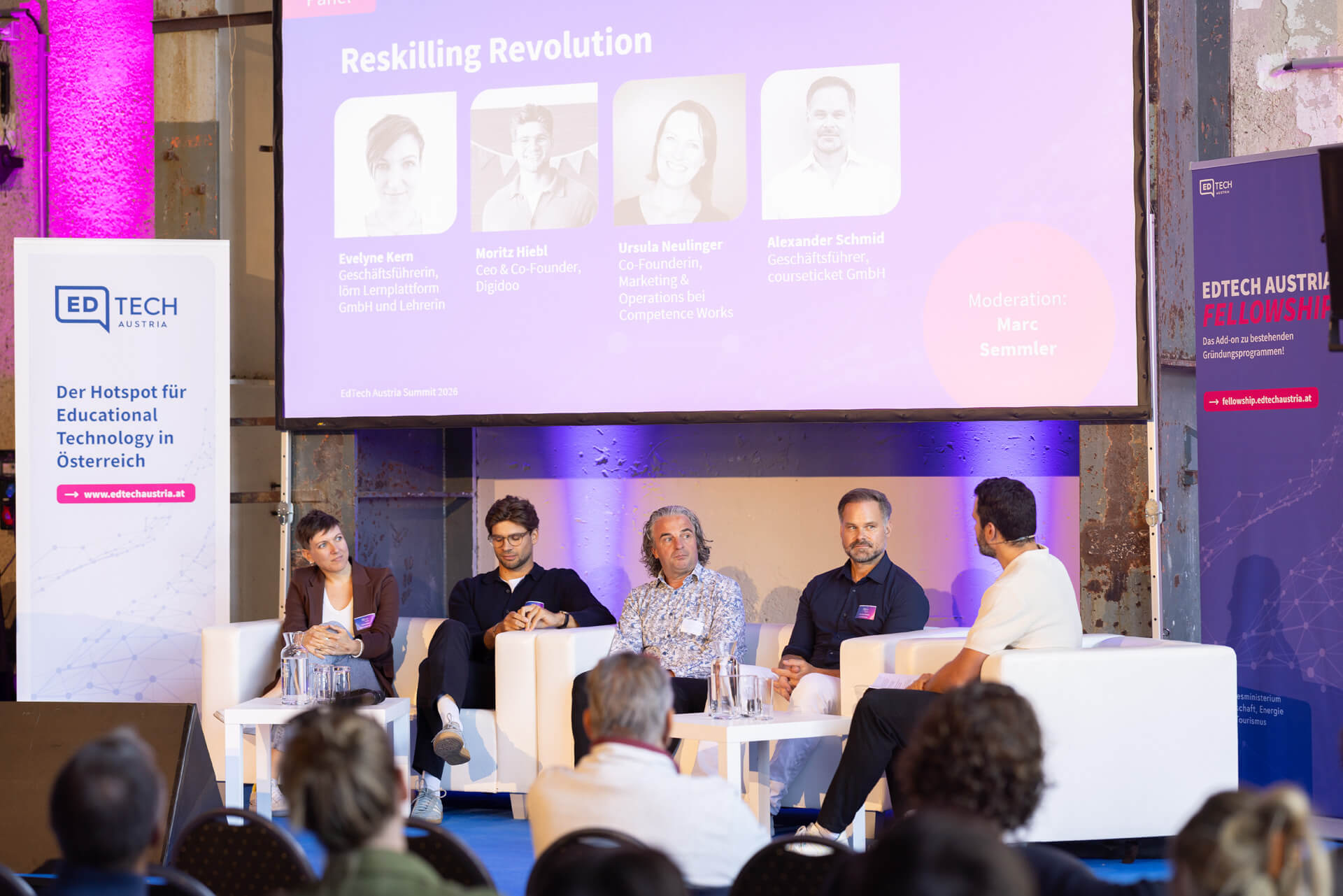
One key insight was that grades and qualifications do not always fully reflect what someone can actually do. This makes it increasingly important to recognise skills and enable individual learning pathways. AI can help by providing personalised learning content or recommending suitable training opportunities. But technology alone cannot create motivation to learn.
Learning is also a social process that requires interaction, guidance and opportunities to apply knowledge in practice. Lifelong learning is therefore not solely an individual responsibility. Educational institutions, companies and policymakers must also create the conditions that make continuous learning possible.
Sharing Ideas and Experiencing EdTech First-Hand
Alongside the discussions on the main stage, three workshops offered opportunities to explore specific topics in greater depth: effective collaboration between teachers and AI, alternative approaches to assessment without traditional grades, and collective reflection on current educational challenges in a “Micro-Barcamp”.
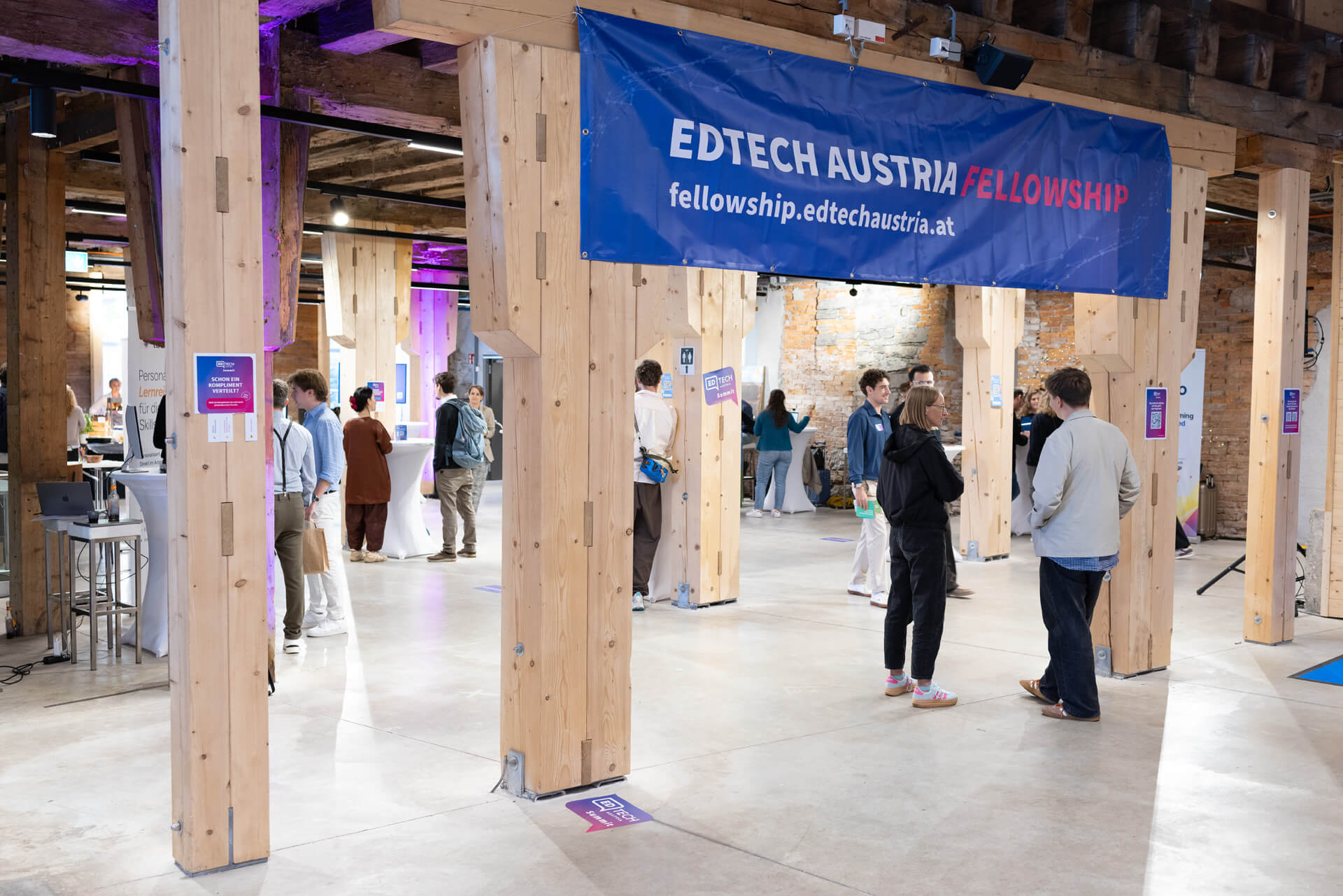
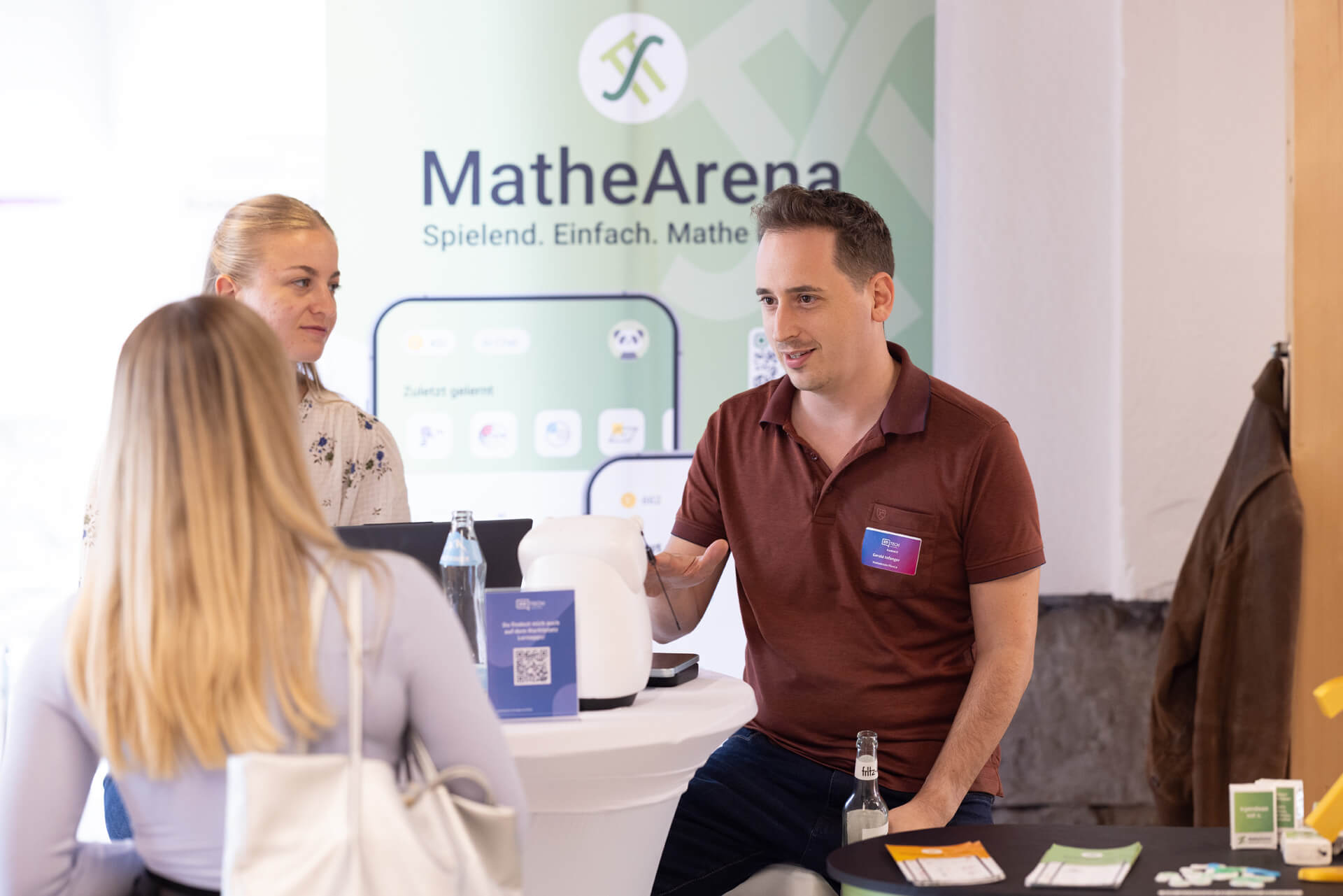
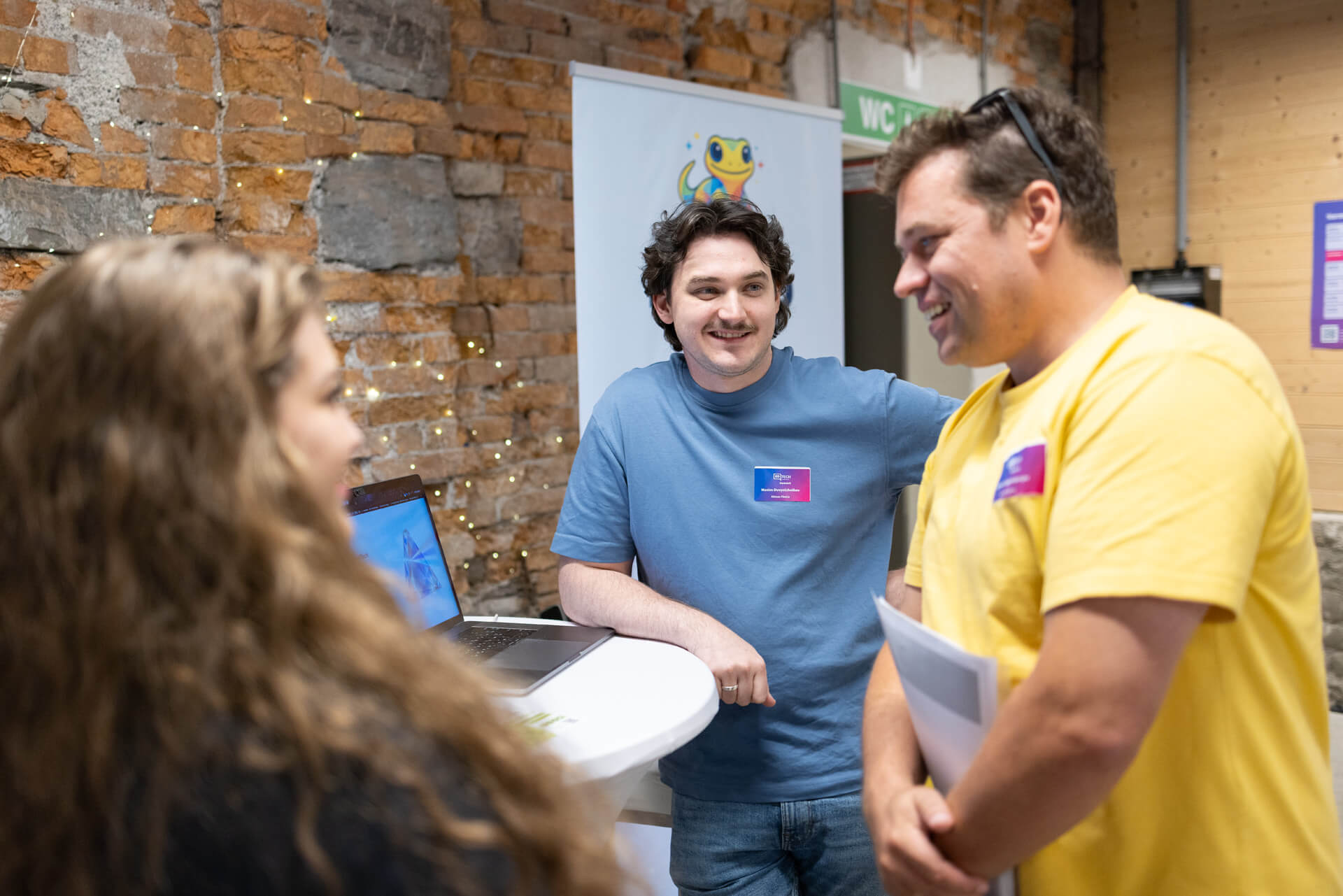
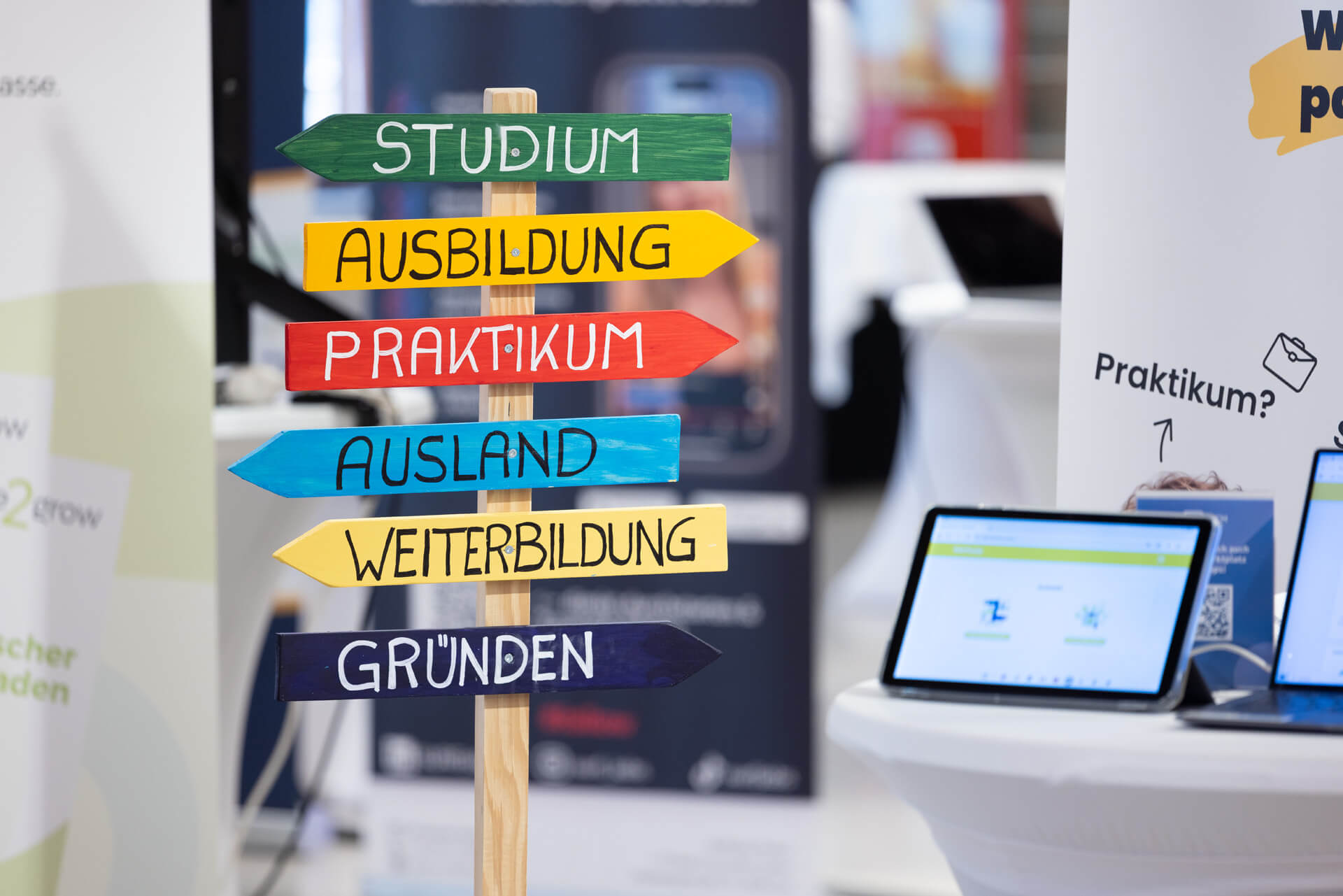
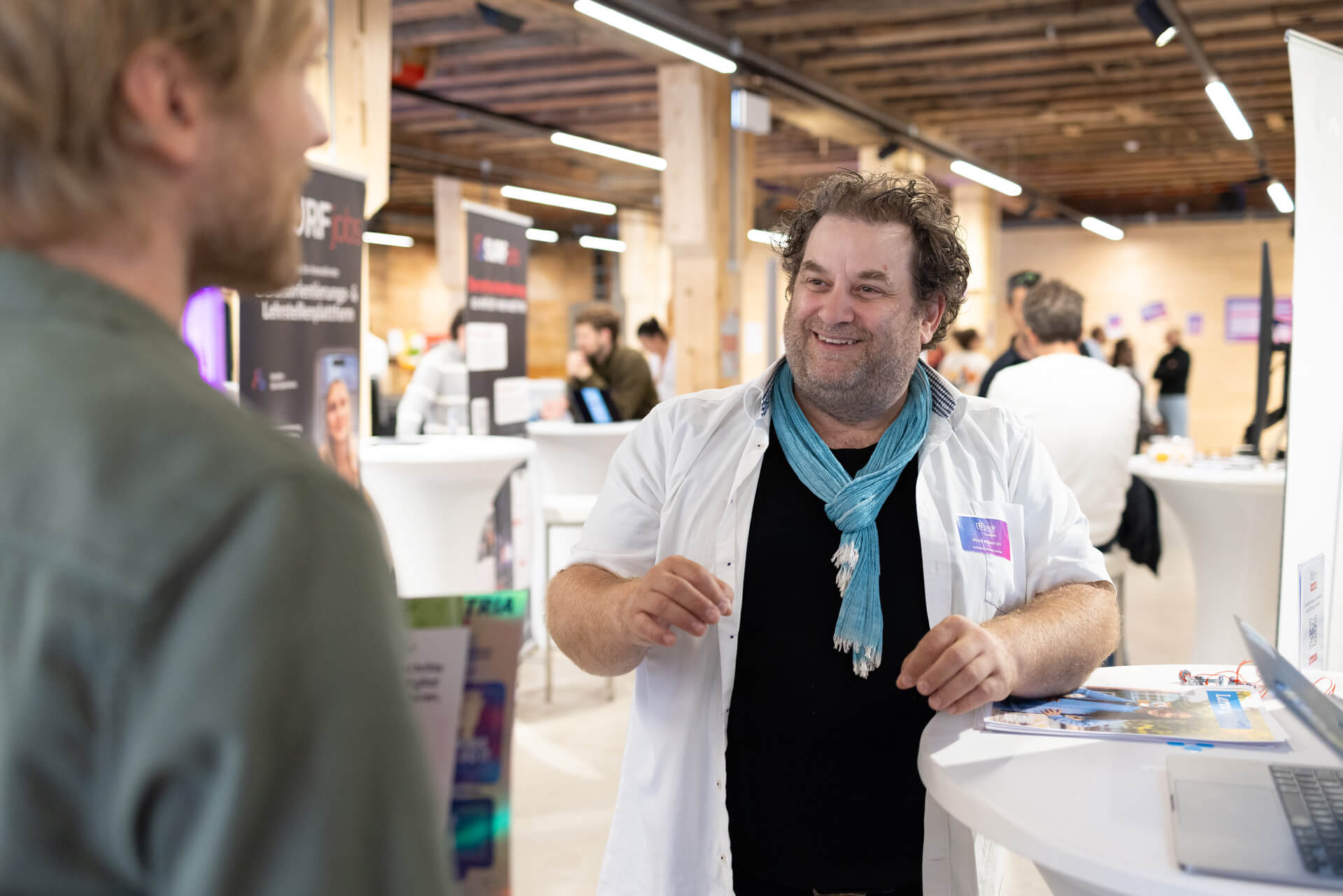
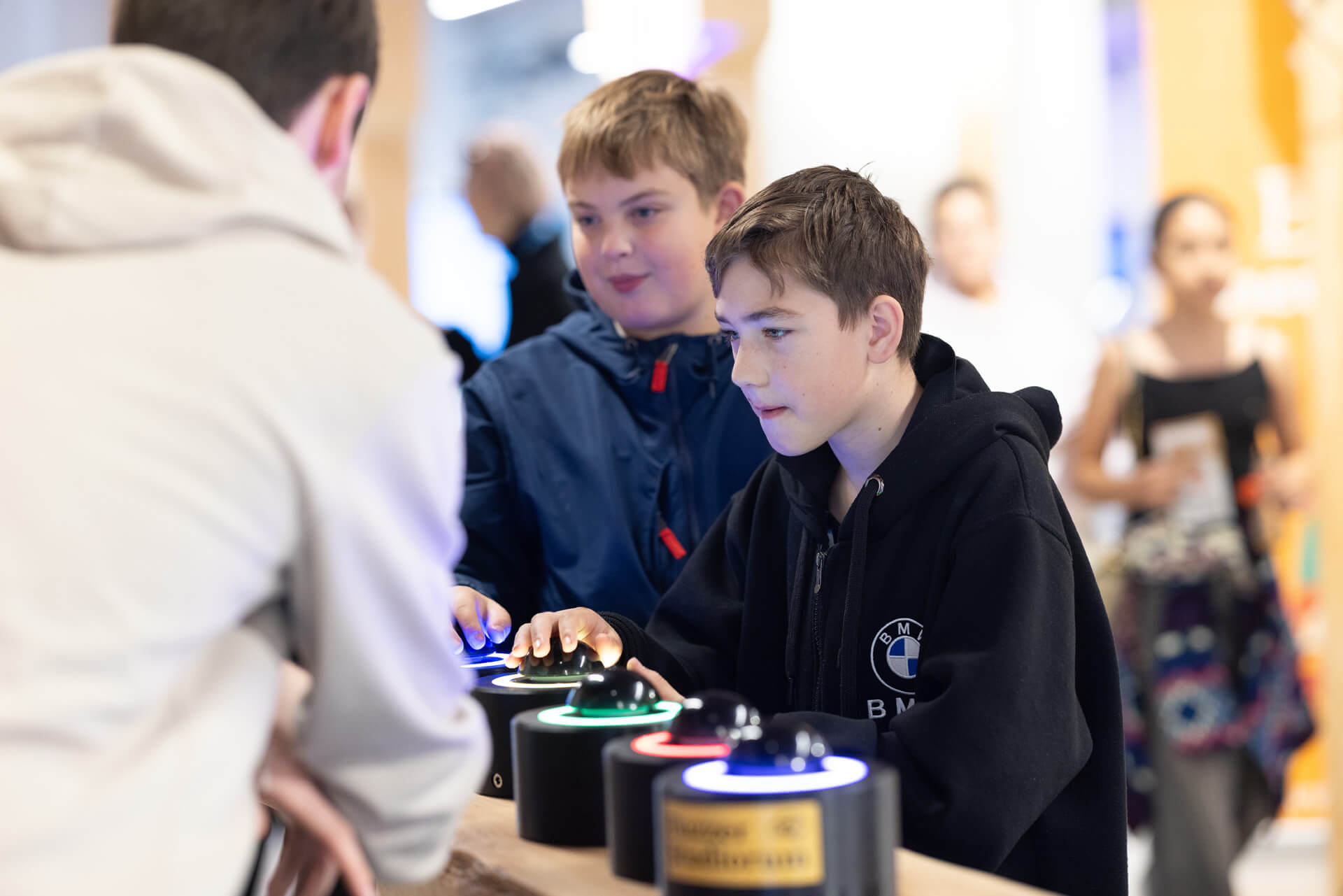
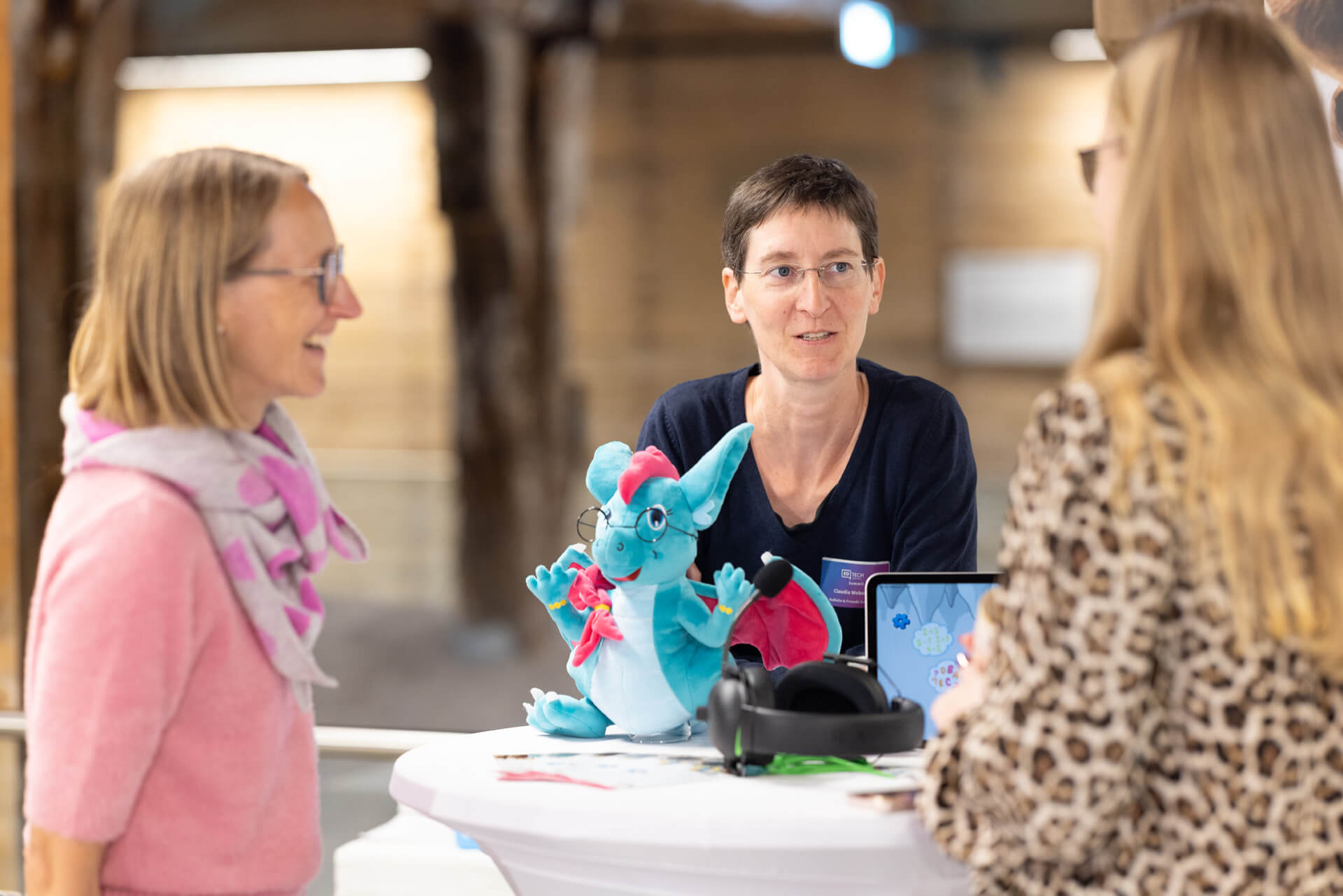
Visitors could also experience the diversity of today’s education technology in the Tech Tasting Area and the EdTech Austria Fellowship Showcasing Area. More than 30 EdTech startups and companies presented their applications and ideas for the future of learning. Participants had the opportunity to try out digital learning solutions and speak directly with the teams behind them.
A particular highlight was the second edition of the EdTech Austria Fellowship Programme, featuring nine participating teams. Eight of them also presented their ideas in a pitch session on the main stage (one fellow was unfortunately unable to attend due to illness). Their pitches were evaluated by an expert jury and the audience.
The top three places went to:
- lernly (a digital learning game for children learning German as a second language) – As the winner, lernly also received two tickets to attend the Austrian Startups Summit.
- Palino (a reading app featuring speech recognition and personalised feedback)
- ivi (an AI-powered language tutor using interactive audio stories without screens)
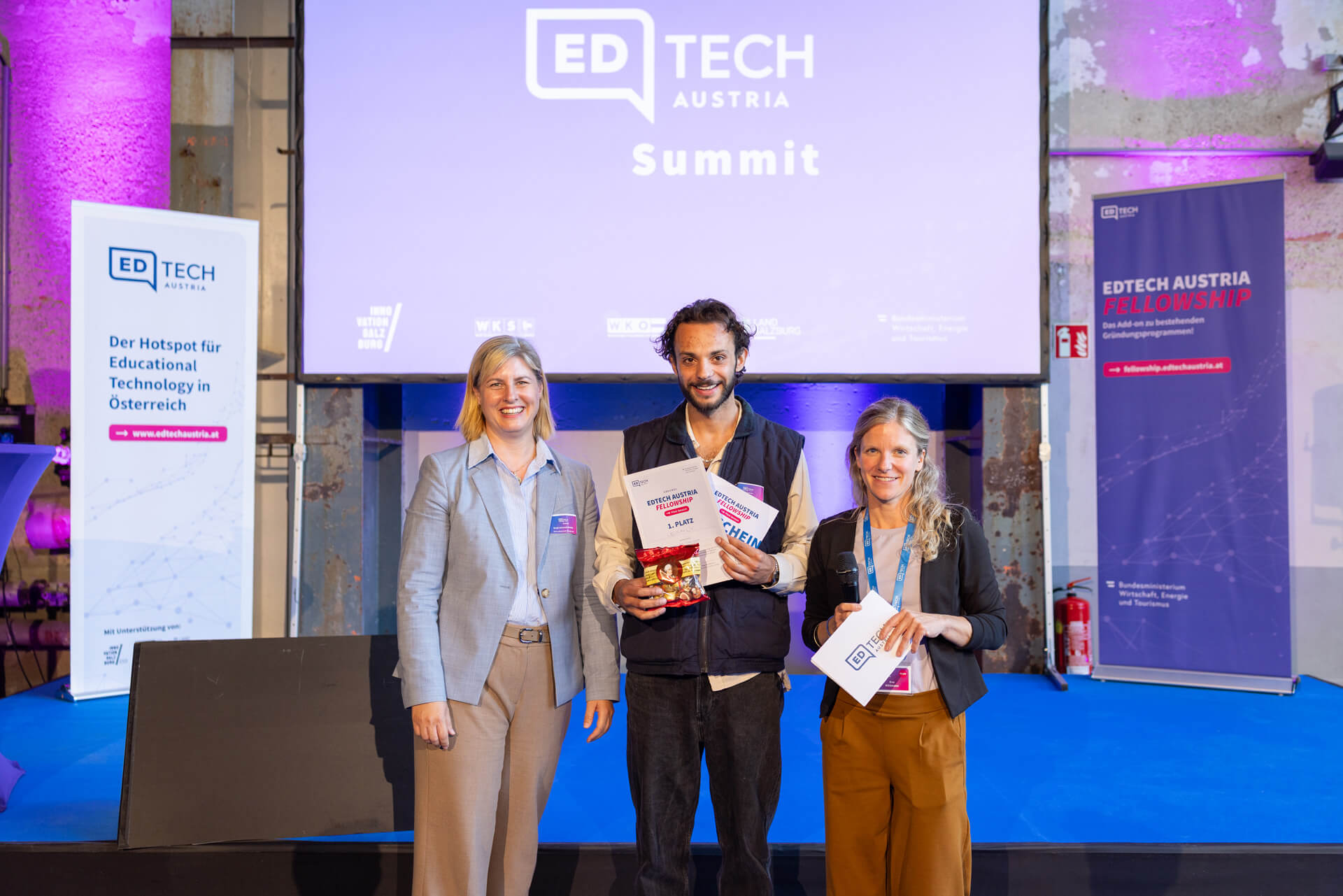
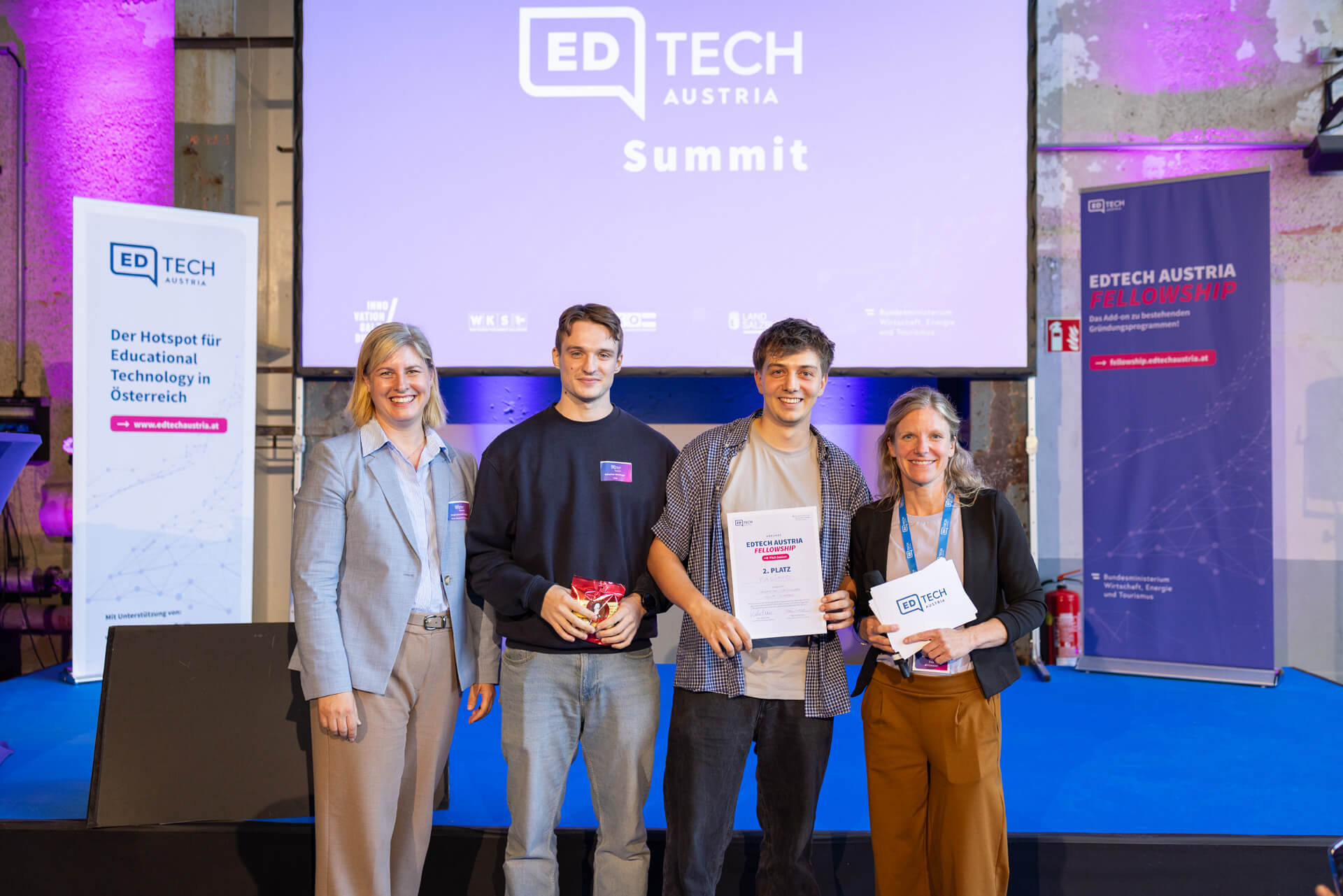
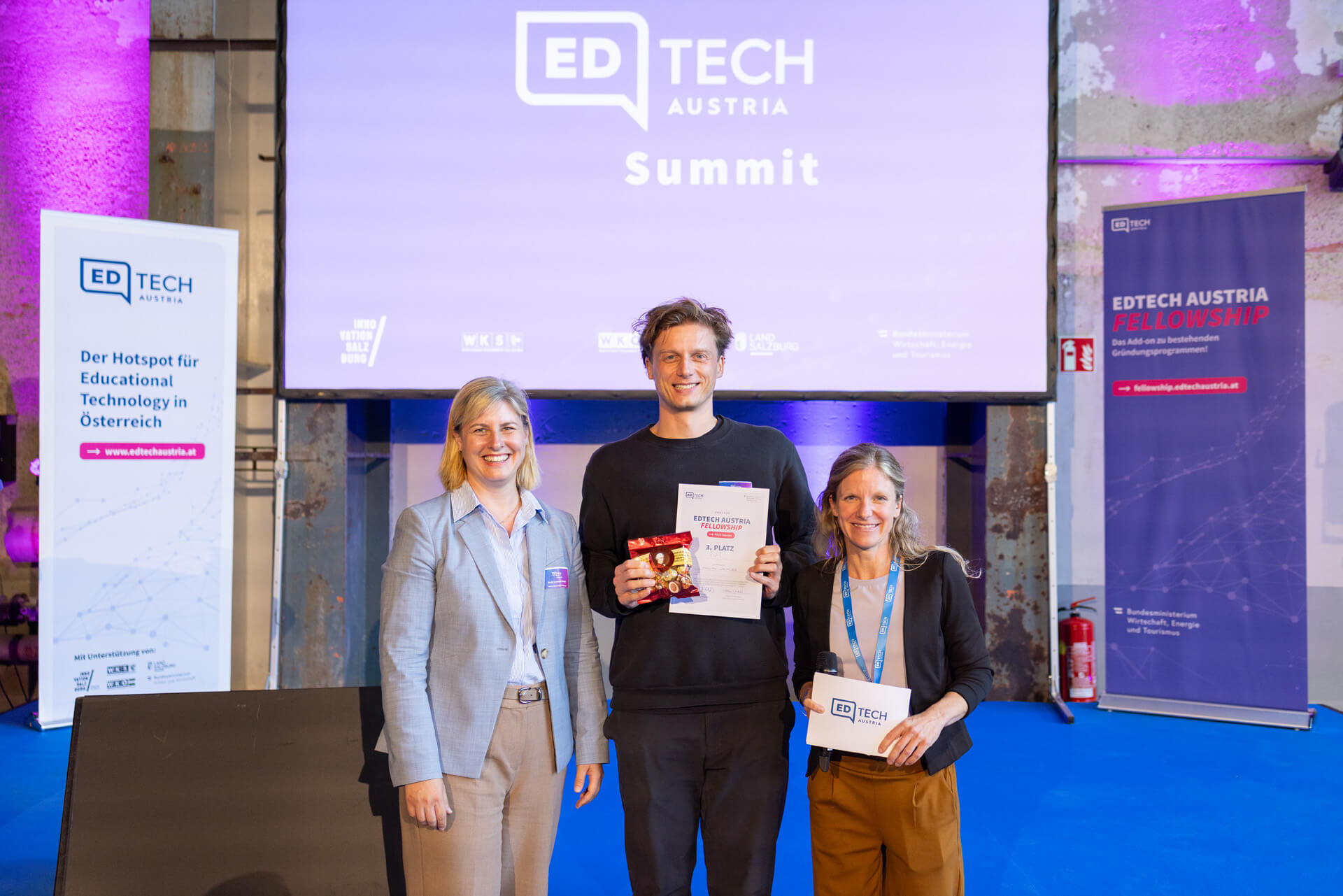
The Fellowship Programme is a joint initiative of EdTech Austria and the Austrian Federal Ministry for Economic Affairs, Energy and Tourism (BMWET).
Shaping the Future of Learning Together
The EdTech Austria Summit 2026 highlighted both the opportunities and the questions that come with the future of learning. How can we use AI meaningfully? How can we develop individual skills without losing sight of collaborative learning? And how can we create educational opportunities that support people throughout their lives?
There are no simple answers. That makes spaces where different perspectives meet, experiences are shared and new ideas emerge all the more important. The Summit provided exactly that – through inspiring insights, practical experiences and countless personal connections. Because the future of learning is not a question we will have to answer someday. We are already shaping it today.
Made Possible Together
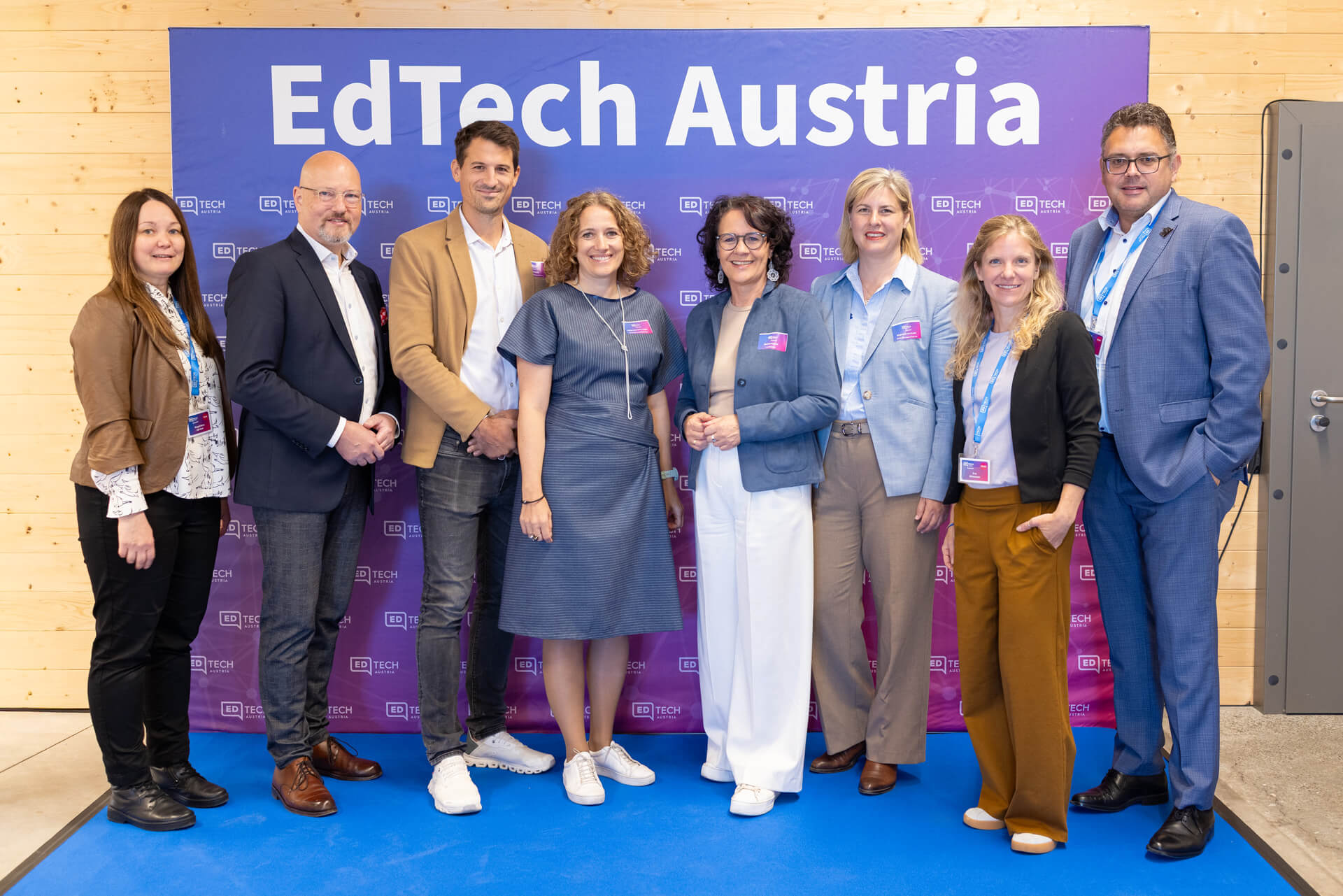
A heartfelt thank you to all speakers, exhibitors, fellows, partners and participants who made the EdTech Austria Summit 2026 such a valuable experience! We would also like to thank the Innovation Salzburg team, whose work behind the scenes ensured that everything ran smoothly.
Our thanks also go to EdTech Austria’s supporting organisations – the Austrian Federal Ministry for Economic Affairs, Energy and Tourism (BMWET), the State of Salzburg, Innovation Salzburg and the Salzburg Chamber of Commerce – and especially to the Austrian Federal Economic Chamber (WKÖ) for supporting the EdTech Austria Summit 2026.
More Impressions:



More articles
The following articles might also interest you.
Our 2025 Impact Report is here
6. October 2026
Stronger together
17. September 2026
Companions and Catalysts: Polycular and EdTech Austria
4. August 2026

“The Digital Backlash is a Phase of Disillusionment”
13. July 2026

Digital Backlash: “Too Many Products Fail to Deliver on Their Promises”
13. July 2026